

One of the most consistent challenges African immigrants face when building professional lives in the United States is credential recognition. Degrees earned in African universities, years of professional experience, and hard-won expertise do not always translate automatically into the American labor market. Employers may be unfamiliar with the institutions, skeptical of the credentials, or simply defaulting to candidates whose educational backgrounds are immediately legible to them. For many African diaspora professionals, this means starting over or finding pathways that level the playing field in a different way.
A U.S. legal credential can be a powerful pathway. Admission to a state bar demonstrates that an applicant has met that jurisdiction’s licensing standards and can open doors in business, advocacy, and community leadership. U.S. citizenship is not universally required, and a U.S. undergraduate degree is not always necessary. Eligibility still depends on the state’s education, examination, character-and-fitness, and other admission requirements. A legal credential also does not itself grant immigration status or permission to work.
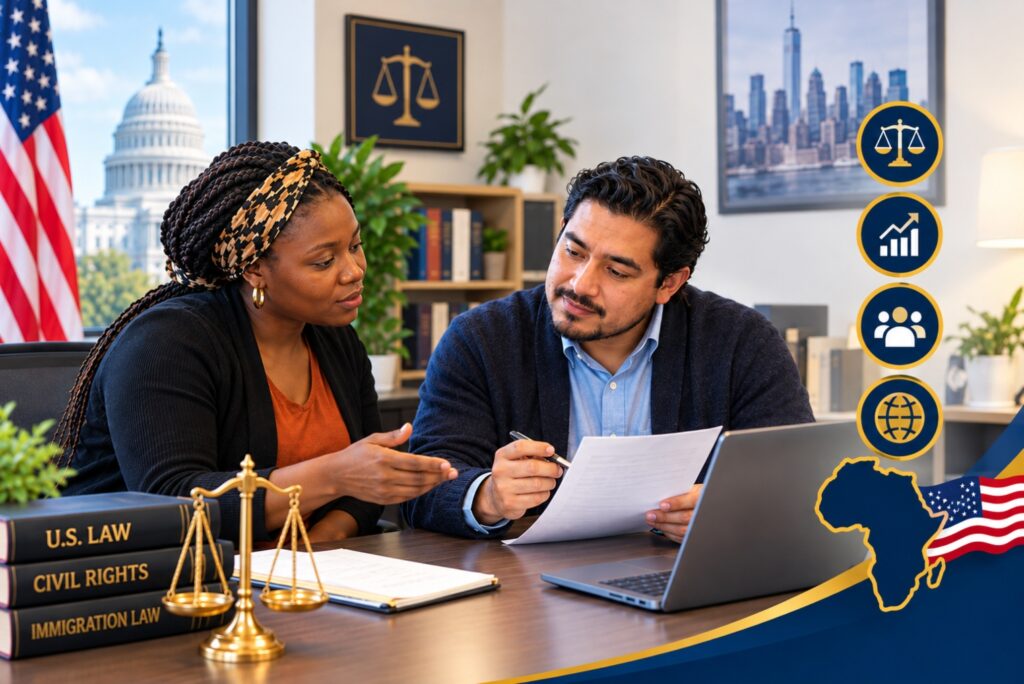
Why the legal profession is particularly well-suited to the diaspora community
Beyond the credential itself, a legal career offers something specific to African diaspora professionals that is harder to quantify but genuinely significant: the opportunity to use the knowledge and perspective that comes from navigating two worlds as a professional asset.
An African immigration attorney who has lived the immigration process understands what their clients are experiencing in ways that no classroom training can replicate. An employment attorney who has personally navigated workplace discrimination and cultural adjustment brings a kind of empathy and insight to their clients’ cases that shapes how they advocate. A business attorney who understands both African entrepreneurial culture and the U.S. regulatory environment becomes a bridge that both communities need.
The African diaspora community in the United States is growing, entrepreneurially active, and in consistent need of legal services, including immigration matters, business formation, employment disputes, real estate transactions, and community advocacy. African diaspora attorneys and paralegals who serve this community are not just building careers. They are filling a genuine gap that their community feels.
Practice areas with particular relevance for diaspora professionals
Several areas of legal practice connect especially naturally to the experience and interests of African diaspora professionals:
- Immigration law: one of the most direct connections, where personal experience with the U.S. immigration system creates a depth of understanding that makes an attorney more effective for clients navigating exactly what they once navigated themselves
- Employment law: protecting workers from discrimination and unfair treatment, with particular relevance for immigrant professionals who have faced systemic barriers in the American workplace
- Business and entrepreneurship law: supporting African-owned businesses with the legal infrastructure they need to grow, from business formation and contracts to intellectual property and regulatory compliance
- International and trade law: advising on cross-border transactions, trade agreements, and business relationships between African and American companies, an area where cultural fluency and language skills are genuine competitive advantages
- Civil rights and discrimination law: advocating for individuals and communities facing discrimination, with a particular connection to the experiences of African immigrants and Black communities in the United States
- Estate planning and wealth transfer: helping diaspora families protect what they have built in the United States and plan for wealth transfer across generations and across borders
The American Bar Association’s public interest law resources provide a useful overview of the range of career paths available within public interest and community-serving legal work.